

Trøllkonufingur Rock Pillar
Jump to chapter
Published: 03/06/2021
Reading time: 3 minutes
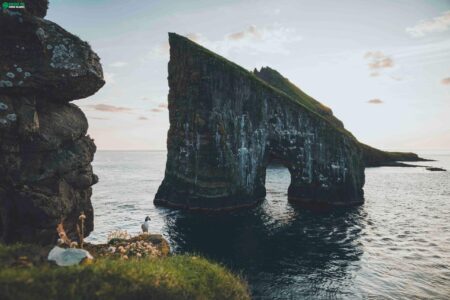
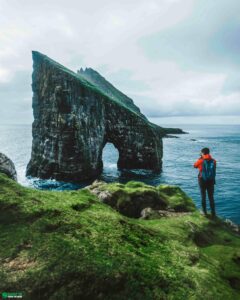
Trøllkonufingur is a towering rock formation on Vágar Island in the beautiful Faroe Islands. The spiky basalt rock rises 313 metres (1027 feet) out of the sea.
Trøllkonufingur translates to the Troll Woman’s Finger. According to Faroese folklore, the rock pillar is the petrified finger of a giant troll woman who came to the islands with the intent of throwing them toward Iceland.
However, she was caught off guard by the rising sun, and the rays turned her to stone. She fell into the sea but she was so enormous that when she reached the ocean floor, the back of her head and one of her fingers still stuck out above the surface. The back of her head is Koltur Island and her finger is Trøllkonufingur.
How to get to Trøllkonufingur Rock Pillar
For a close-up view of Trøllkonufingur, head to the village of Sandavágur and follow the signs towards the rock pillar.
There is a parking lot at the end of the street, Traðarvegur, from where the 20-minute walk to the rock pillar begins. Follow the unpaved road along the coast for 1.5 kilometres (0.9 miles) until you reach the viewpoint.

Behind the rock pillar, you can see the cliffs of Streymoy Island, and if you look south, you can see the small Koltur Island.
Trøllkonufingur is also visible from the nearby village of Miðvágur. You can see it from the west side of the village, including from the trailhead to the famous Trælanípa Cliff.
Whether you enjoy the views of Trøllkonufingur from Sandavágur or Miðvágur, you will do so in tranquil surroundings. Both places come with complete solitude, and you are likely to be one of only few travellers around.

Birds Surrounding Trøllkonufingur Rock Pillar
The coastal cliffs surrounding Trøllkonufingur offer prime real estate for seabirds, particularly during the breeding season. Most birds will be here from late spring in May through summer until September.
Visitors might spot clusters of Northern fulmars sitting on the ocean below. The distinctive tube-nosed birds will also be visible as they fly through the pristine air surrounding the attraction.


More travel blogs


Popular tours
-

Inspiring 6 Hour ‘Lake Above The Ocean’ Tour
Tour startsTórshavnDuration6 hours -
New Tour
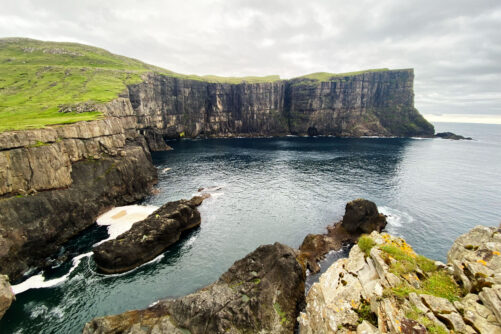
Suðuroy Island | The Photography Tour
Tour startsTórshavnDuration9 hours -
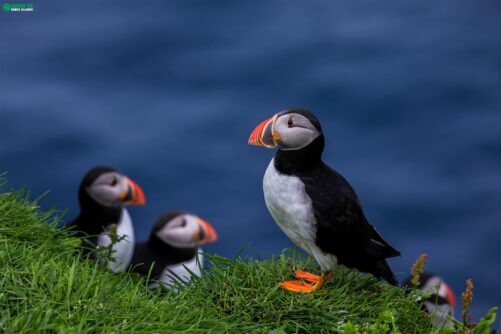
Refreshing 7 Day Summer Package of the Faroe Islands
Tour startsTórshavnDuration7 days -
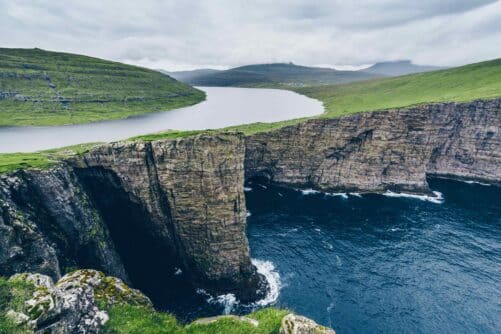
Unbelievable 6 Hour ‘Lake Above the Ocean’ Tour
Tour startsTórshavnDuration6 hours -
Kirkjubøur – Sandoy Island Day Tour
Tour startsTórshavnDuration7 hours -
James Bond Highlights
Spectacular 7 Hour Kallur Lighthouse Day Tour
Tour startsTórshavnDuration7 hours -
Personal Photographer Tour
Tour startsTórshavnDuration6 hours -
Perfect 5-Day Vacation Package in Faroe Islands
Tour startsVágar AirportDuration5 days -
Wonderful 6 Hour Tour of Vágar Island
Tour startsTórshavnDuration6 hours -
Mountainous 6 Hour Northern Islands Tour
Tour startsTórshavnDuration6 hours -
The Classic Faroe Islands Day Tour
Tour startsTórshavnDuration8 hours -
Epic 8 Day Summer Self Drive Tour of Faroe Islands
Tour startsVágar AirportDuration8 days -
Essential 6 Hour Highlights of Vágar Island
Tour startsTórshavnDuration6 hours -

The Grand 10 Day Faroe Islands Tour Package
Tour startsVágar AirportDuration10 days -

The Private Day Tour | Faroe Islands
Tour startsTórshavnDuration7 hours


Other interesting Attractions