


Mykines Island
Jump to chapter
Published: 02/06/2021
Reading time: 6 minutes
Mykines Island (pronounced ‘Mee-chi-nes’) lies off the west coast of Vágar Island in the Faroe Islands. Mykines is blessed with the largest Atlantic Puffin colony in the archipelago.
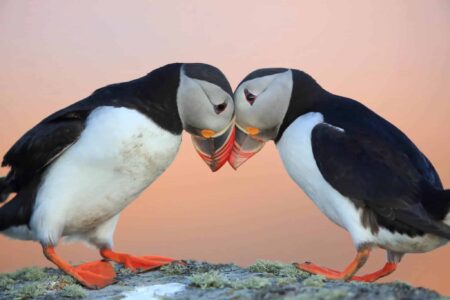
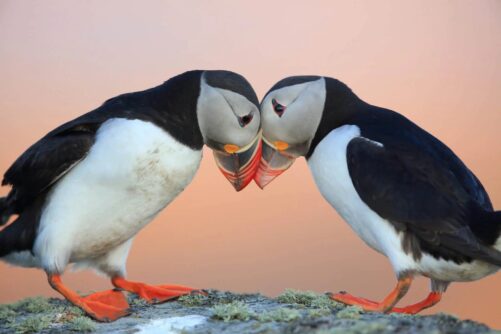
The wildlife on Mykines Island is incredible during the summer months. This is the time of the year when you can see everything from puffins, common murre and northern fulmar to black-legged kittiwake and northern gannet. Thousands of puffins nest on the island from May to the end of August.
If you visit the Faroe Islands between May and August, you will have a puffin guarantee. The puffins leave the archipelago and fly away from the Faroe Islands in early September. Visitors must join a guided tour on Mykines Island to be able to hike to the puffin colony.
Mykines Island rises high from the sea on all sides. Knúkur is the highest peak, reaching 560 metres (1837 feet) above sea level, providing a panoramic view of the island.
The island is 10,28 km2 and it stretches 7 kilometres (4,3 miles) from east to west. You will notice that the island is fairly narrow from north to south.
Remote as it is, visiting Mykines Island is always an amazing experience. People come to the island to enjoy its awe-inspiring nature, to soak in the atmosphere, and to explore the quietness of the place.
Everything about this place is truly special and for many people, Mykines Island is the very highlight of their summer experience on the Faroe Islands. It is far away from any urban distraction.

Getting to Mykines Island
Getting to Mykines Island can be a challenge. The island is connected to Vágar Island by ferry and helicopter, but both services are weather dependent. Visiting Mykines Island on a day trip is only possible during the summer.
If you want to go to Mykines Island during your Faroe Islands trip, plan to do it on one of your first days there. That way, if your ferry or helicopter gets cancelled, you will have more chances of rescheduling.
The island is car-free, so vehicles cannot be brought over. It is also not necessary as the island is small with very few roads.
By ferry

Chris Poplawski.
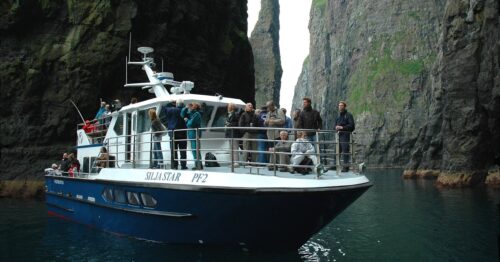
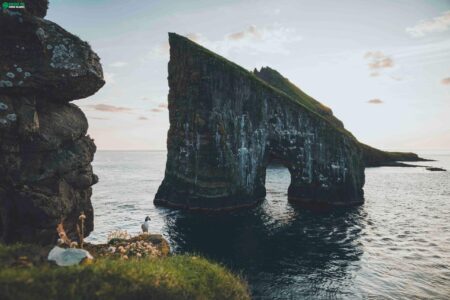
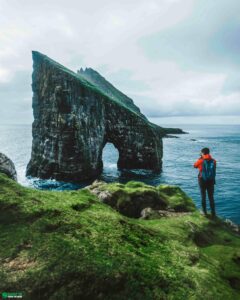
From May 1st to August 31st, there are daily ferry services to Mykines Island from Sørvágur on Vágar Island. The ferry ride takes around 45 minutes and on the way, you will sail past the Drangarnir Sea Stacks and the craggy Tindhólmur Islet. You will also see Skarðsáfossur Waterfall and Múlafossur Waterfall from a sea perspective. Make sure to grab a seat outside so you can enjoy the views along the way.
The ferry ride gets very rough on windy days, so you might want to take sea sickness tablets before the trip. For a more smooth journey, take a look at the Mykines Shuttle Boat.
As the island is really steep and surrounded by lots of skerries, submerged rocks, and sea stacks, there is only one place on the island where boats can dock. The small pier lies below the only settlement on the island. Take a look at this Mykines harbour live webcam to see the current conditions.
By helicopter
The public helicopter connects the island with Vágar Airport four times a week all year. However, it does not return to the island on the same day, so day trips by helicopter are not possible.
In the summer, you can take the helicopter one way and the ferry the other way. The helicopter ride takes about 10 minutes and is very scenic. With very limited number of seats available on the helicopter, in most cases it is not worth the hassle to try getting a seat on the helicopter.

The Village on Mykines Island
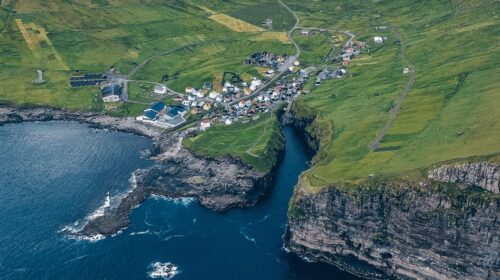
There are around 40 houses on Mykines Island, all located in the same settlement on the western side of the island. Only a few of these houses are inhabited year-round. In the winter, the village is very quiet and isolated, whereas there are thousands of visitors during the summer.
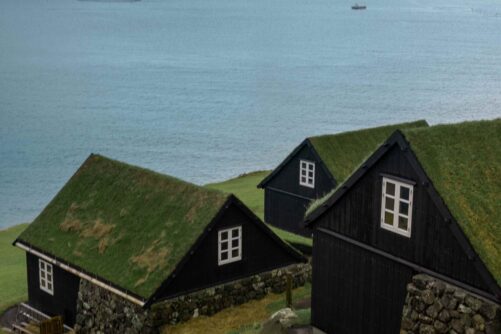
Many of the houses have turf roofs, which are characteristic of traditional Faroese architecture. The village church also has a turf roof and dates back to 1879. The locals make sure to maintain the turf roofs well.
In the middle of the village, you can see the first outdoor swimming pool that was built in the Faroe Islands. It was carved into the rock benath a stream in 1927.
There are public toilets and a café in the village. There is no supermarket, so overnight visitors should plan accordingly.

Hiking on Mykines Island
Trail Admission Fee: Everyone that visits Mykines Island and plans to go hiking outside the village must pay a fee of 500 DKK per person. This can be booked on site when on the island. Children aged 14 and under hike for free. For less hassle, take a look at these guided tours to Mykines.
The guided hikes on Mykines Island lead up to the impressive rocky coastline above the village where you will see thousands of puffins flying back and forth and sitting on the cliffs. You will also get amazing views of the nearby Mykineshólmur Islet, which is the westernmost tip of the Faroe Islands. You can see that the islet has been exposed to the full force of the North Atlantic Ocean. Seals are regular visitors on the skerries there.

Mykines Island on a Map
You can see Mykines Island on the map of the Faroe Islands located as the most westerly island in the archipelago.


More travel blogs


Popular tours
-
Refreshing 3 Hour Boat Tour including Fishing
Tour startsKaldbaksfjørður FjordDuration3 hours -
Tranquil 4 Day Winter Trip of the Main Faroe Islands
Tour startsVágar AirportDuration4 days -

Eysturoy Island | The Photography Tour
Tour startsTórshavnDuration7 hours -
Perfect 5-Day Vacation Package in Faroe Islands
Tour startsVágar AirportDuration5 days -
Travel With a Local | Go As You Please
Tour startsTórshavnDuration7 hours -
Breathtaking 6 Day Faroe Islands Summer Package
Tour startsTórshavnDuration6 days -
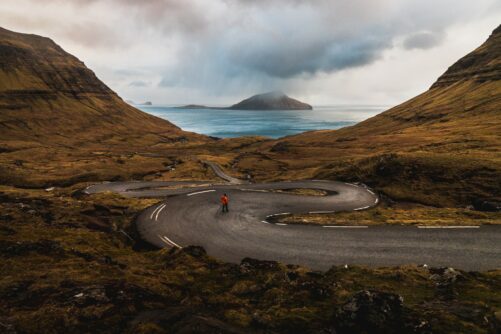
Norðradalsskarð, Sornfelli & Kirkjubøur | Private VIP Tour
Tour startsTórshavnDuration2 hours -
Mykines Shuttle Boat
Tour startsSørvágurDuration4 hours -
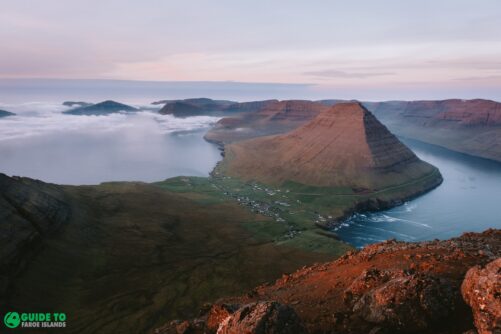
Classic 4 Hour Northern Isles Tour
Tour startsKlaksvíkDuration4 hours -
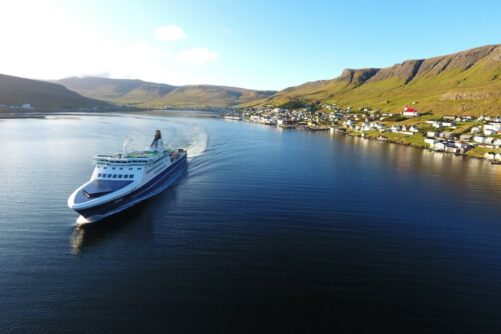
Spectacular 12 Hour Suðuroy Island Day Tour
Tour startsTórshavnDuration12 hours -

Engaging 2 Hour Tórshavn in a Seashell Tour
Tour startsTórshavnDuration2 hours -
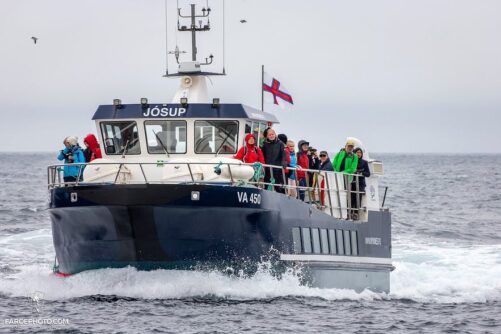
Puffin Boat to Mykines Island
Tour startsSørvágurDuration45 minutes -
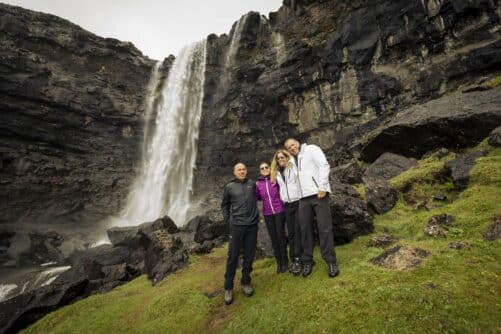
Personal Photographer Tour
Tour startsTórshavnDuration6 hours -

Unordinary 3 Hour Tour on Lake Above the Ocean
Tour startsLake LeitisvatnDuration3 hours -
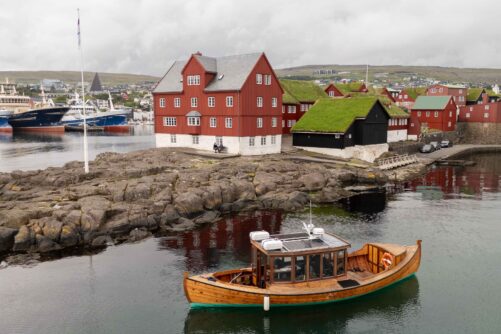
Tórshavn Essential Harbour Round Trip
Tour startsTórshavnDuration1 Hour


Other interesting Attractions


